
A Website Brief for a Service Business: From First Visit to a Useful Enquiry
Define what the visitor should understand
A service-business website brief should explain who the service helps, which problem it addresses and how a visitor can make a useful enquiry. Start with that journey before deciding how many decorative sections to add. A person seeking a repair or office support needs practical information.
This guide is an editorial planning framework, not a ranking formula. Google’s people-first guidance supports useful, reliable content; it does not guarantee positions, leads or inclusion in AI answers.

Choose one clear purpose for each service page
Describe the service in language the intended customer recognises. Separate the problem, relevant conditions and the next step. If a page lists everything the business has ever done, a new visitor may struggle to identify the service that fits.
Give the content writer accurate boundaries: service area, consultation route and what needs assessment. Do not invent prices, accreditations, success rates or customer examples to fill a layout. Unknown facts should be resolved or omitted.
Prepare approved material and a contact route
Collect the original company logo, public contact details and images the company has permission to use. Decide whether a diagram is illustrative or a photo documents real work. Do not label a constructed scene as a customer job.
Name the owner of incoming calls, messages or form submissions. A contact button needs a correct destination and someone responsible for the next step. Agree which information the visitor should provide without asking for passwords or private files.
Write acceptance checks that a customer can follow
Review the page on a phone and a desktop. Can the visitor identify the main service, read the heading and find the contact option? Test each button and form with non-sensitive sample data and agree who will confirm delivery.
Also check image proportions, alternative text, heading structure and the visible service description. These checks help make a usable page; none proves search visibility or business conversion. Record actual results rather than treating a design preview as a completed launch.
Separate delivery, maintenance and measurement
The quotation should distinguish content preparation, design, functionality, domain or hosting work and ongoing maintenance. Define who will keep service information current after launch. A new offer or contact change needs an owner.
INSPUR TECH can discuss website design and SEO-related requirements using a practical brief. After release, review real enquiries and available search data over comparable periods. Start with unknown where data is unavailable, and improve the page around observed customer needs rather than promising a fixed outcome.
Preparation checklist
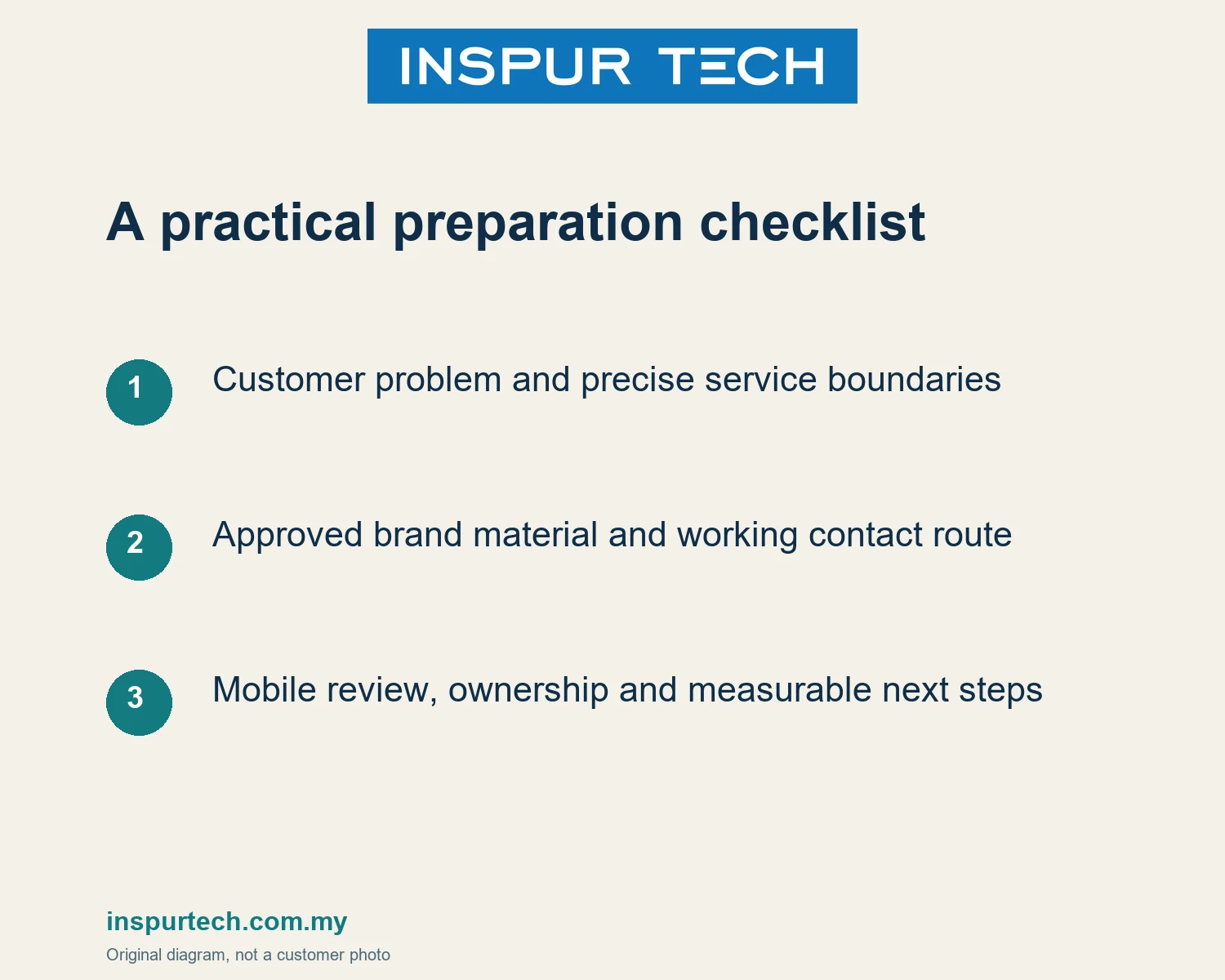
- Customer problem and precise service boundaries
- Approved brand material and working contact route
- Mobile review, ownership and measurable next steps
Discuss the next step
INSPUR TECH SDN. BHD. provides computer repair and business IT support in Johor Bahru. For a scoped enquiry, contact WhatsApp +60 11-1098 6863. Share the task and device or product type first; do not send passwords, payroll records or private customer files in a public message.
Discuss website and project requirements with INSPUR TECH:
https://inspurtech.com.my/contact/
References and scope
https://developers.google.com/search/docs/fundamentals/creating-helpful-content
Source review: 18 October 2026. Preparation sequences and examples are original editorial guidance, not customer cases, software tests or a promise of results. Images are original illustrative diagrams. Recheck product and commercial conditions before publication; exact menu paths, statutory advice, price and response-time commitments are outside this article.