
How to Write a Software Plugin Requirement With a Useful Acceptance Example
Describe one result before requesting automation
A useful plugin requirement describes an input, the action required and a verifiable output. Choose one repeated business task and define what a correct result looks like. “Connect everything” leaves the developer without a boundary or an acceptance test.
This guide is a requirements-writing framework for SMEs. It does not assert that a particular AutoCount, SQL Account or other product supports a proposed integration. Version, module, interface, permissions and licensing need separate technical review.

Draw the current workflow in plain language
Name the person who begins the task, the source of the information and the next person who needs the result. Explain which step is repetitive or error-prone. Use an anonymised example with the same structure as the real job.
Do not send a full customer list or live accounting backup to illustrate a simple workflow. Identify confidential fields and agree how any necessary technical investigation will be authorised and handled.
Make the expected output testable
Define required fields, destination and the meaning of a completed task. If an operator must review the result, say so. An automatically created record and a business-approved record are different outcomes.
Include an ordinary example and at least one exception: a missing identifier, an already processed item or an input that should be rejected. State what should happen in that case without inventing how the software must implement it.
List dependencies and decisions
Record the product, installed version, relevant modules and other plugins. Name the application owner and the person who can approve access. If an external service is involved, identify it and note that its interface and terms still require verification.
Ask the developer to separate confirmed feasibility, open questions and optional work. A prototype or sample result is not evidence that a production connection is complete. Keep estimates and delivery commitments tied to an agreed scope.
Agree acceptance and change handling
Write down who will review the sample, which cases must pass and what evidence will be retained. Discuss the test environment, production release approval and the response if a change does not work as intended. These are planning questions, not proof of deployed safeguards.
INSPUR TECH can discuss programming, accounting-software support and plugin requirements. Bring one sanitised workflow and the intended result to the conversation. The next step is a scoped assessment, not an unconditional promise that every manual process can be automated.
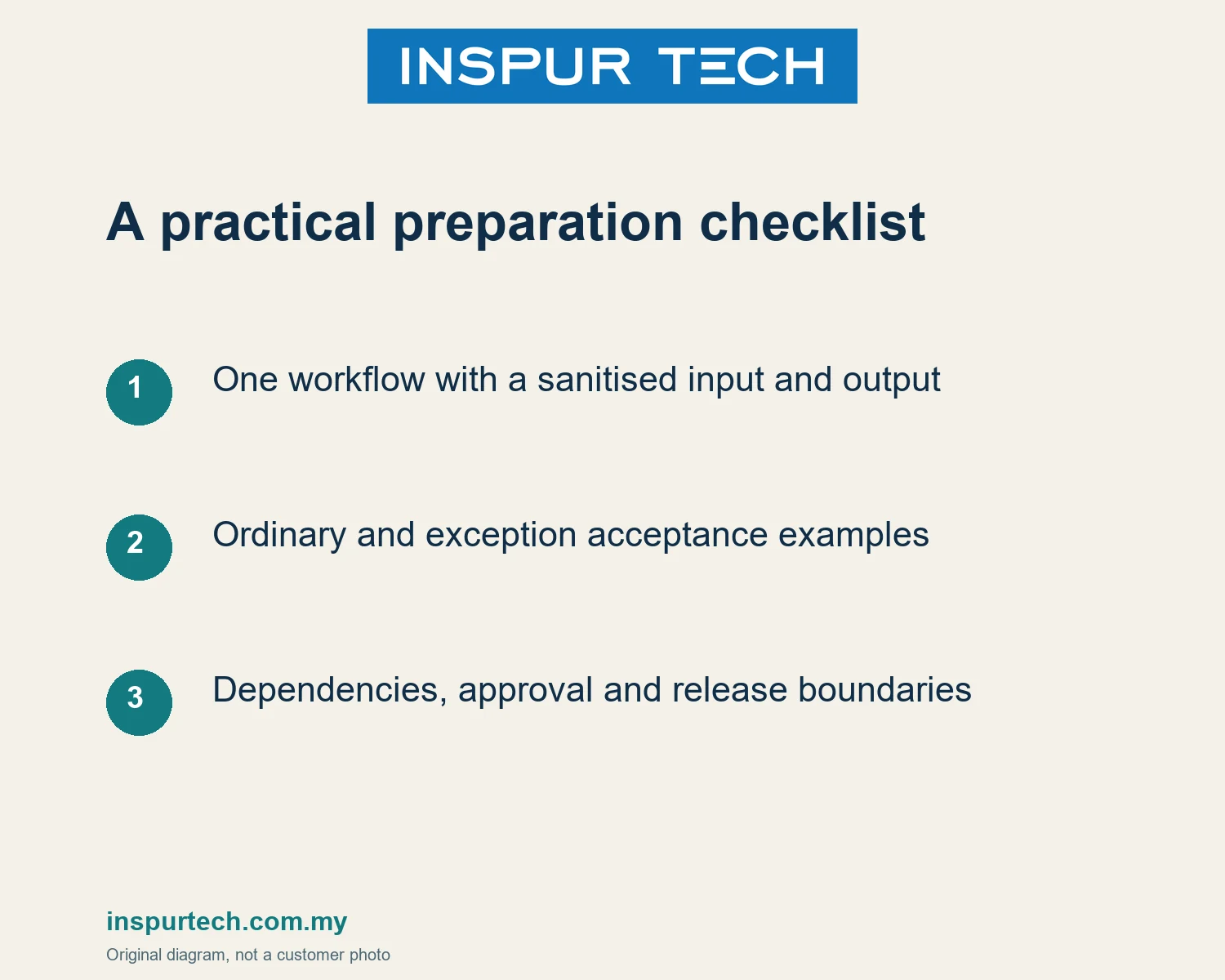
Preparation checklist
- One workflow with a sanitised input and output
- Ordinary and exception acceptance examples
- Dependencies, approval and release boundaries
Discuss the next step
INSPUR TECH SDN. BHD. provides computer repair and business IT support in Johor Bahru. For a scoped enquiry, contact WhatsApp +60 11-1098 6863. Share the task and device or product type first; do not send passwords, payroll records or private customer files in a public message.
Related INSPUR TECH service:
https://inspurtech.com.my/accounting-software/
References and scope
https://docs.sql.com.my/sqlacc
https://autocount.freshdesk.com/support/home
Source review: 18 October 2026. Preparation sequences and examples are original editorial guidance, not customer cases, software tests or a promise of results. Images are original illustrative diagrams. Recheck product and commercial conditions before publication; exact menu paths, statutory advice, price and response-time commitments are outside this article.